myth takes episode 9 mythological tour of the solar system 6: saturn/kronos

Francisco_de_Goya,_Saturno_devorando_a_su_hijo_(1819-1823)

Saturn Devouring His  Sons. Francisco Goya circa 1819-1823. Image source: Wikipedia.

img_6482As we travel outwards in the solar system, we travel back in mythological time. This week we learn about Jupiter/Zeus’ father, Saturn/Kronos. The Greek and Roman depictions of him are quite different: Roman mythology emphasizes his agricultural connections and associates him with a Golden Age of mankind, whereas the Greek poet Hesiod depicts him as a tyrant.


https://www.podbean.com/media/player/8pevt-60d165?from=yiiadmin

Download this episode (right click and save)


Source Passages

Hesiod Theogony 126-138, 158-187, 453-473

Virgil Aeneid 8.415-433

Ovid Metamorphoses 1


Translation Sources

Hesiod. Theogony. Trans. Richard Caldwell & Stephanie Nelson. Newburyport MA: Focus Publishing, 2009.

Ovid. Metamorphoses. Trans. A. D. Melville. Oxford: Oxford University Press, 2008.

Virgil. Aeneid. Trans. Robert Fitzgerald. New York: Vintage Classics, 1990.


Selected Sources

NASA. “Saturn.” http://solarsystem.nasa.gov/planets/saturn


Join us on Twitter @InnesAlison and @darrinsunstrum

Subscribe on iTunes so you don’t miss an episode! https://itunes.apple.com/ca/podcast/mythtake/id1103569489?mt=2

Google Play https://goo.gl/app/playmusic?ibi=com.google.PlayMusic&isi=691797987&ius=googleplaymusic&link=https://play.google.com/music/m/Iaegzaquhc7lfvc24icrzardzmu?t%3DMythTake

Find our RSS on Podbean http://alisoninnes.podbean.com

This week’s theme music: “Super Hero” by King Louie’s Missing Monuments from the album “Live at WFMU” (2011). Used under Creative Commons license. Music used under Creative Commons license and available from Free Music Archive.

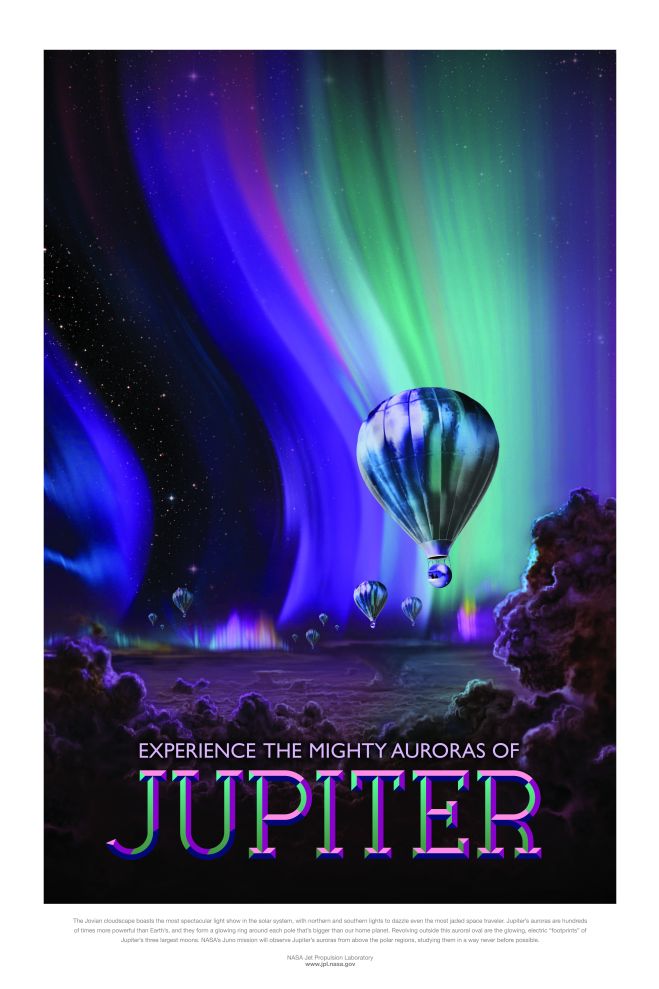
mythtakes episode 8 mythological tour of the solar system 5: jupiter/zeus


jupiter copy.jpg

Image courtesy NASA/JPL-Caltech. http://www.jpl.nasa.gov/visions-of-the-future/

 

img_6482Today we visit the first of the Gas Giants, Jupiter. This mysterious planet, covered with swirling, toxic clouds in shades of orange, red, white, and brown, is the largest in our solar system. The “King of the Planets” is named after the Greek and Roman king of the gods, Jupiter (Zeus). We examine passages from Greek and Roman literature to shed some light on how the ancients thought of their god they called “the father of gods and men.”

 
https://www.podbean.com/media/player/mjicm-6085f6?from=yiiadmin

Download this episode (right click and save)


Primary Source Passage

Theogony 71-74
…he was ruling the
sky as king, holding the thunder and fiery lightning-bolt himself,
having the victory from his father Cronus by strength; in right detail
he dealt laws and appointed donors to the immortals.

Theogony 478-491
They sent her [Rhea] to Lyctus, to the rich land of Crete,
when she was about to bear her youngest son,
great Zeus; vast Earth received him from her
in wide Crete to tend and raise.
Carrying him through the swift black night, she came
first to Lyctus; taking him in her arms, she hid him
in a deep cave, down in dark holes of holy each,
on Mount Aegean, dense with woods.
Rhea wrapped a huge stone in a baby’s robe, and fed it
to Sky’s wide-ruling son, lord of the earlier gods;
he took it in his hands and put it down his belly,
the fool; he did not think in his mind that instead
of a stone his own son, undefeated and secure, was left
behind, soon to master him by force and violence and
drive him from his honour, and be lord of the immortals himself.

Theogony 491-500
Swiftly then the strength and noble limbs
of the future lord grew; at the end of a year,
tricked by the clever advice of Earth,
great crooked-minded Cronus threw up his children,
defeated by the craft and force of his own son.
First he vomited out the stone he had swallowed last;
Zeus fixed it firmly in the wide-pathed land
at sacred Python in the vales of Parnassus,
to be a sign thereafter, a wonder to mortal men.
Trans. Richard Caldwell


Ancient Sources

Theogony. Trans. Richard Caldwell & Stephanie Nelson. Newburyport MA: Focus Publishing, 2009.


Selected Sources

NASA. “Jupiter.” http://solarsystem.nasa.gov/planets/jupiter

NASA. “Juno: Peering Beneath  Jupiter’s Clouds.” http://solarsystem.nasa.gov/missions/juno

NASA. “NASA’s Juno Spacecraft to Risk Jupiter’s Fireworks for Science.” http://solarsystem.nasa.gov/news/2016/06/16/nasas-juno-spacecraft-to-risk-jupiters-fireworks-for-science 16 June 2016.

Osborne, Hannah. “Juno Mission: How NASA will manoeuvre 250 000 km/h spacecraft into Jupiter’s orbit.” http://www.ibtimes.co.uk/juno-mission-how-nasa-will-manoeuvre-250000-km-h-spacecraft-into-jupiters-orbit-1563401 International Business Times 3 June 2016.


Shout-Outs

Astronomer Erin Ryan on Twitter @erinleeryan, website http://www.erinleeryan.com

The Juno mission on Twitter: @NASAJuno


Join us on Twitter @InnesAlison and @darrinsunstrum

Subscribe on iTunes so you don’t miss an episode! https://itunes.apple.com/ca/podcast/mythtake/id1103569489?mt=2

Google Play https://goo.gl/app/playmusic?ibi=com.google.PlayMusic&isi=691797987&ius=googleplaymusic&link=https://play.google.com/music/m/Iaegzaquhc7lfvc24icrzardzmu?t%3DMythTake

Find our RSS on Podbean http://alisoninnes.podbean.com

This week’s theme music: “Super Hero” by King Louie’s Missing Monuments from the album “Live at WFMU” (2011). Used under Creative Commons license. Music used under Creative Commons license and available from Free Music Archive.

 

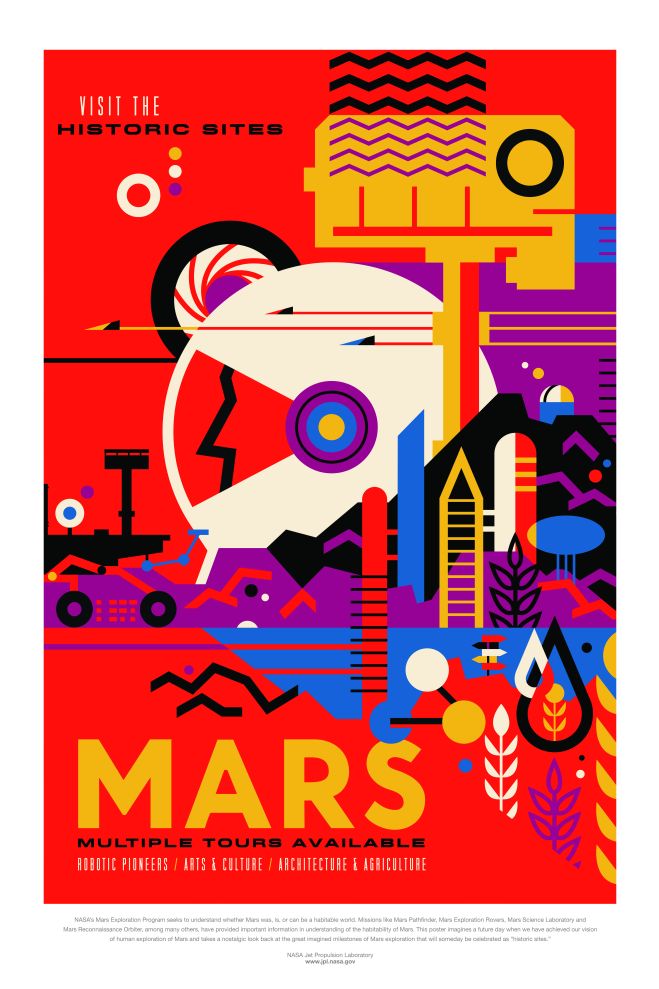
mythtake episode 7 mythological tour of the solar system 4: mars/ares

mars copy

Image courtesy NASA/JPL-Caltech. http://www.jpl.nasa.gov/visions-of-the-future/

img_6482We skip over planet earth (for now) and head to our fourth stop in our tour of the solar system: Mars. The Red Planet,, named for the Roman god of war, has intrigued humans for millennia. Today we learn about the Greek god of war, Ares, from his appearances in the Homeric Hymn to Ares, Odyssey 8.266-366 and Iliad 5.418-425, 880-969.
https://www.podbean.com/media/player/3aamy-5ff9b7?from=yiiadmin

Download this episode (right click and save)


Homeric Hymn to Ares

Ares, exceedingly mighty, rider of chariots, golden-helmeted,
strong-spirited, shield-carrier, guardian of cities, armed in bronze,
strong-handed, untiring spear-bearer, defender of Olympus,
father of Victory, successful in war, ally of Themis,
a ruler for enemies, leader of truly just men,
staff-bearer of men’s prowess, you who win your fire-bright sphere
among the planets with their seven paths in the sky, where your fiery
colts ever keep you above the third orbit.
Hear me, defender of mortals, giver of flourishing youth,
shining down a gentle light form above on my life
and my strength in war, so that I may be able
to ward off bitter cowardice from the my head,
and to bend the deceptive impulse of my soul with my wits
and to restrain the sharp forty of my heart which provokes me
to enter the icy-cold din of battle. But you, blessed one,
grant me courage to stay within the carefree bounds of peace
while escaping the conflict of enemies and violent death.

(Trans. Susan Shelmerdine)


Ancient Sources

Homeric Hymn to Ares

Homer Odyssey 8.266-366

Homer Iliad 5. 418-425, 880-969

Ovid Metamorphoses 4.228


Selected Sources

Homer. Iliad. Trans. Anthony Verity. Oxford: Oxford University Press, 2011.

Homer. Odyssey. Translated Richmond Lattimore. New York: Perennial Classics, 1967.

Homeric Hymns. Trans. Susan Shelmerdine. Newburyport MA: Focus Publishing, 1995. Print.

McDonald, Bob. “Mars: from God of War to habitable planet.” Quirks and Quarks. Blog. 27 May 2016 (http://www.cbc.ca/news/technology/mars-god-war-earth-1.3602986)

Nasa.gov “Mars: The Red Planet” (http://solarsystem.nasa.gov/planets/mars )

Nasa.gov “Mars Today: Robotic Exploration” (http://www.nasa.gov/mission_pages/mars/main/index.html)

Nasa.gov “Your Weight in Space” (http://solarsystem.nasa.gov/kids/index.cfm?Filename=puzzles)


Join us on Twitter @InnesAlison and @darrinsunstrum

Subscribe on iTunes so you don’t miss an episode! https://itunes.apple.com/ca/podcast/mythtake/id1103569489?mt=2

Google Play https://goo.gl/app/playmusic?ibi=com.google.PlayMusic&isi=691797987&ius=googleplaymusic&link=https://play.google.com/music/m/Iaegzaquhc7lfvc24icrzardzmu?t%3DMythTake

Find our RSS on Podbean http://alisoninnes.podbean.com

This week’s theme music: “Super Hero” by King Louie’s Missing Monuments from the album “Live at WFMU” (2011). Used under Creative Commons license. Music used under Creative Commons license and available from Free Music Archive.
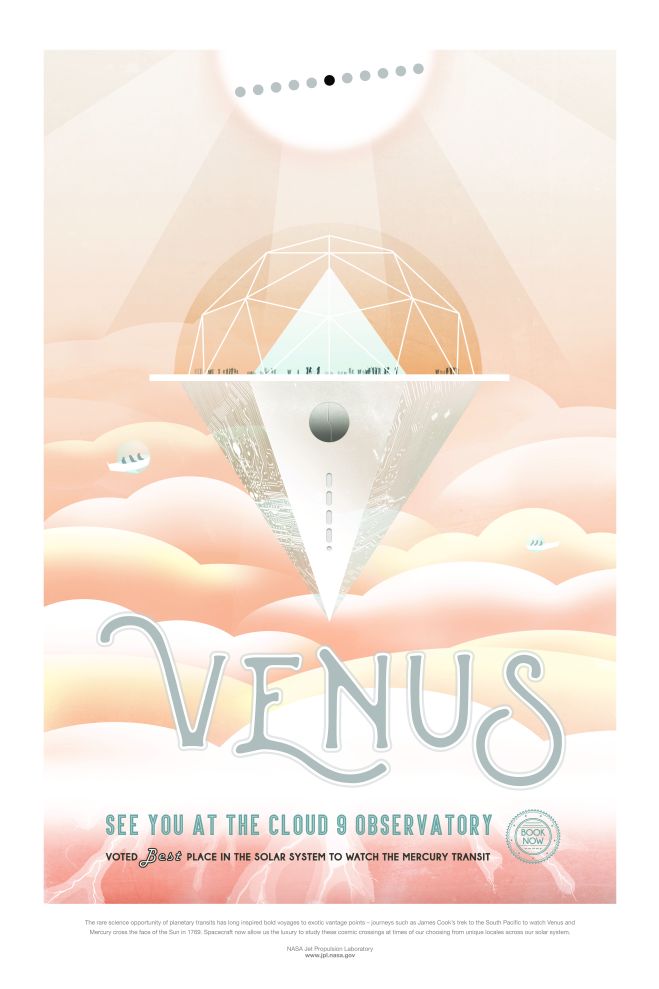
mythtake episode 6 mythological tour of the solar system 3: venus/aphrodite

venus copy

Image courtesy NASA/JPL-Caltech. http://www.jpl.nasa.gov/visions-of-the-future/

img_6482The third stop on our Mythological Tour of the Solar System is Venus (Greek goddess Aphrodite). We take a look at the origins of this mysterious goddess of sexuality.

Be advised, this episode includes discussion of sex in mythological contexts.

https://www.podbean.com/media/player/wt5dv-5f98da?from=yiiadmin

Download this episode (right click and save)


Hesiod Theogony 188-206

As soon as he cut off the genitals with adamant,
he threw them from land into the turbulent sea;
they were carried over the sea a long time, and white
foam arose from the immortal fresh; within a girl
grew; first she came to holy Cythera, and
next she came to wave-washed Cyprus.
A revered and beautiful goddess emerged, and
grass grew under her supple feet. Aphrodite
[foam-born goddess and well-crowned Clytherea]
gods and men name her, since in foam she grew;
and Cytherea, since she landed at Cypher;
and Cyprogenea, since she was born in wave-beat Cyprus;
and “Philommeides,” since she appeared from the genitals.
Eros accompanied her, and fair Longing followed,
when first she was born and went to join the gods.
She has such honour from the first, and this is her
portion among men and immortal gods:
maidens’ whispers and smiles and deceptions,
sweet pleasure and sexual love and tenderness.
(Trans. Richard Caldwell)


Homeric Hymn to Aphrodite 53-74
So he cast in her heart sweet longing for Anchises,
who, at that time, like the immortals in build, was tending cattle
on the lofty peaks of MT. Ida rich in springs.
Then indeed, seeing him, laughter-loving Aphrodite
was struck with love, and astounding desire seized her heart.
To Cyprus she went and entered her fragrant temple
at Paphos where her sacred precinct was and her fragrant altar.
There she went inside and shut the gleaming doors.
And the Graces bathed her and pointed her
with ambrosial olive oil, such as is poured over the gods who are forever,
divinely sweet, which was made fragrant for her.
Having clothed herself well in all her beautiful robes
adorned with gold, laughter-loving Aphrodite
hastened to Troy, leaving behind sweet-smelling Cyprus,
swiftly making her way high up among the clouds.
She came to Ida rich in springs, mother of beasts,
and went straight to the shepherd’s hut across the mountain.
And fawning after her leapt grey wolves and flashing-eyed lions,
bears and swift leopards hungry for deer.
Seeing them she rejoiced in her heart
and cast longing in their breasts, and together they all
lay down in pairs in their shadowy lairs.
(Trans. Susan Shelmerdine)


Euripides Hippolytus 1-23

I am powerful and not without a name among mortals
and within the heavens. I am called the goddess Cypris.
Of those who dwell within Pontus
and the boundaries of Atlas and see the light of the sun,
I treat well those who revere my power,
but I trip up those who are proud towards me.
For this principle holds among the race of the gods also:
they enjoy being honoured by mortals.
I shall now show you the truth of these words:
Theseus’ son, Hippolytus, the Amazon’s offspring,
reared by pure Pittheus–
he alone of the citizens of this land of Trozen
says that I am by nature the most vile of divinities.
He spurns the bed and doesn’t touch marriage,
but donors Apollo’s sister, Artemis, the daughter of Zeus,
considering her the greatest of divinities.
Always consorting with the virgin through the green wood,
he rids the land of beasts with swift dogs,
having come upon a more than mortal companionship.
I don’t begrudge them these things; why should I?
But I will punish Hippolytus this day
for the wrongs he has done me.
(Trans. Michael Halleran)


Selected Sources

Theogony. Trans. Richard Caldwell & Stephanie Nelson. Newburyport MA: Focus Publishing, 2009.

Homeric Hymns. Trans. Susan Shelmerdine. Newburyport MA: Focus Publishing, 1995. Print.

Euripides. Hippolytus. Trans. Michael Halleran. Ed. Stephen Esposito. Newburyport MA: Focus Publishing, 2004.

Nasa.gov “Venus” (http://solarsystem.nasa.gov/planets/venus )

Nasa.gov “Your Weight in Space” (http://solarsystem.nasa.gov/kids/index.cfm?Filename=puzzles)


Shout Outs & Notes

Check out The Endless Knot (http://www.alliterative.net) podcast by Mark Sundaram and Aven McMaster.

Gods Behaving Badly (http://www.hachettebookgroup.com/titles/marie-phillips/gods-behaving-badly/9780316067638/) by Marie Phillips, 2008.


Join us on Twitter @InnesAlison and @darrinsunstrum

Subscribe on iTunes so you don’t miss an episode! https://itunes.apple.com/ca/podcast/mythtake/id1103569489?mt=2

Google Play https://goo.gl/app/playmusic?ibi=com.google.PlayMusic&isi=691797987&ius=googleplaymusic&link=https://play.google.com/music/m/Iaegzaquhc7lfvc24icrzardzmu?t%3DMythTake

Find our RSS on Podbean http://alisoninnes.podbean.com

This week’s theme music: “Super Hero” by King Louie’s Missing Monuments from the album “Live at WFMU” (2011). Used under Creative Commons license. Music used under Creative Commons license and available from Free Music Archive.

mythtake episode 05 mythological tour of the solar system 2: Mercury/Hermes

The second stop img_6482on our Mythological Tour of the Solar System is Mercury. Meet the Greek god Hermes (Roman= Mercury) in the Homeric Hymn to Hermes as he goes from baby to Olympian god in just two days!

Passage: Homeric Hymn to Hermes 20-42, 163-181

https://www.podbean.com/media/player/cgabj-5f07a2?from=yiiadmin

Download this episode (right click and save)

Photos: (left) A tortoise munching on grass, Athens; (centre) A herma National Museum of Archaeology, Athens; (right) A headless herma on display on the south slope of the Athenian acropolis. All photos ©AlisonInnes 2009.


Homeric Hymn to Hermes (20-42, 163-181)

And after he leapt up from the immortal limbs of Maia
he did not stay for long lying in his holy cradle,
but sprang up and sought the cattle of Apollo,
walking over the threshold of the high-vaulted cave.
There, finding a tortoise, he won endless joy.
Hermes indeed was the first to make the tortoise a singer,
as she met him at the courtyard gates,
feeding on the rich grass in front of the house,
going lightly on her feet. And the swift son of Zeus
laughed watching her and immediately spoke a word:
:Already, a very useful token for me! I do not scorn it.
Hail, comrade of the feast, lovely in shape, played at the dance,
a welcome sight! Whence did you, a tortoise living in the mountains,
clothes yourself in this beautiful plaything, this gleaming shell?
But I will take and carry you into the house, and you will profit me,
nor will I dishonour you; but first you will help me.
It is better to be at home, since the outdoors is harmful.
For surely you will be a defence against baneful attacks
while alive, but if you die, then you would sing very beautifully.”
So he spoke and at the same time lifting her up in both hands
he went back into the house carrying the lovely plaything.
Then, after swinging her around, he pierced through the life-force
of the mountain-tortoise with a knife of grey iron.
……
But Hermes answered her with crafty words,
“My mother, why do you aim these threats at me as if I were a foolish young child, who knows very few evils in his heart
and cowers, fearful, at his mother’s threats?
But I shall enter into whatever skill is best
to feed myself and you forever. And the two of us
alone among the immortal gods will not continue to stay here
in this place without offerings and without prayers, as you bid.
Better to converse with the immortals all our days,
rich, wealthy, with much land for crops, than to sit
at home in a gloomy cave. And about honour,
I, too, will enter into the cult which Apollo has.
And if my father will not grant this, I will try,
(and I have the power), to be a leader of thieves.
And if the son of glorious Leto searches for me,
I think something else even greater will befall him.
For I will go to Pytho to break into his great house;
from there I will plunder splendid tripods in abundance and cauldrons
and gold, and gleaming iron in abundance
and much clothing. And you will see it is you want.”

(Trans. Susan Shelmerdine)


Selected Sources

Homeric Hymns. Trans. Susan Shelmerdine. Newburyport MA: Focus Publishing, 1995. Print.

Asthma, Aaron J. editor. The Theoi Project; Guide to Greek Mythology. “Olympian Gods of Greek Mythology.” 2007. (http://www.theoi.com/greek-mythology/olympian-gods.html)

Nasa.gov “Mercury” (http://solarsystem.nasa.gov/planets/mercury)

Nasa.gov “Your Weight in Space” (http://solarsystem.nasa.gov/kids/index.cfm?Filename=puzzles)

International Astronomical Union (IAU) Working Group for Planetary System Nomenclature (WGPSN). Gazetteer of Planetary Nomenclature. “Planetary Names: Categories for Naming Features on Planets and Satellites.” (http://planetarynames.wr.usgs.gov/Page/Categories)


Join us on Twitter @InnesAlison and @darrinsunstrum

Subscribe on iTunes so you don’t miss an episode! https://itunes.apple.com/ca/podcast/mythtake/id1103569489?mt=2

Google Play https://goo.gl/app/playmusic?ibi=com.google.PlayMusic&isi=691797987&ius=googleplaymusic&link=https://play.google.com/music/m/Iaegzaquhc7lfvc24icrzardzmu?t%3DMythTake

Find our RSS on Podbean http://alisoninnes.podbean.com

This week’s theme music: “Super Hero” by King Louie’s Missing Monuments from the album “Live at WFMU” (2011). Used under Creative Commons license. Music used under Creative Commons license and available from Free Music Archive.

mythtake episode 4 mythological tour of the solar system 1: helios

img_6482MythTake Episode 4
Mythological Tour of the Solar System 1: Helios (Sun)

Today we embark on a mythological tour of the solar system! Our first stop is the sun, a.k.a., Helios. We take a look at the Homeric Hymn to Helios and Odyssey 12.340-403 to find out more about this lesser-known Greek god.

https://www.podbean.com/media/player/pvk7h-5ed4da?from=yiiadmin
Download this episode (right click and save)


Passage One: Homeric Hymn to Helios

Begin to sing again, O Muse Kalliope, daughter of Zeus,
about Helios the radiant god, whom cow-eyed Euryphaëssa
bore to the son of Gaia and starry Ouranos.
For Hyperion married the famous Euryphaëessa,
how own sister, who bore him beautiful children,
Eos of the rosy arms and fair-haired Selene,
and tireless Helios like the immortals,
who shines on mortals and immortal gods
as he drives his horses. With his eyes he flashes a piercing look
from his golden helmet, and bright beams shine radiantly
from him, while from his head and over his temples
the bright cheekpieces cover his graceful face
shining from afar. On his skin a beautiful, finely-woven garment
shimmers in the blast of the winds, and his stallions
………………………….
He stays his golden-yoked chariot and horses there
until he sends them wondrously through the heavens to the ocean.
Farewell, lord, kindly grant delightful sustenance.
Having begun from you I will celebrate there ace of mortal men,
the demigods whose deeds the gods have shown to men.

Homeric Hymns. Trans. Susan Shelmerdine. Newburyport MA: Focus Publishing, 1995. Print.


Passage Two: Odyssey 12.374-388

Lampetia of the light robes ran swift with the message
to Hyperion the Sun God, that we had killed his cattle,
and angered at the heart he spoke forth among the immortals:
“Father Zeus, and you other everlasting and blessed
gods, punish the companions of Odysseus, son of Laertes;
for they outrageously killed my cattle, in whom I always
deleted, on my way up into the starry heaven,
or when I turned back again from heaven towards earth. Unless
these are made to give me just recompense of army cattle,
I will go down to Hades’ and give my light to the dead men.”
Then in turn Zeus who gathers the clouds answered him:
“Helios, shine on as you do, among the immortals
and mortal men, all over the grain-giving earth. For my part
I will strike theses men’s fast ship midway on the open
wine-blue sea with a shining bolt and dash it to pieces.”

Homer. Odyssey. Translated Richmond Lattimore. New York: Perennial Classics, 1967.


Sources

Archaic Greek:
Homeric Hymn 31 Helios
Homeric Hymn to Demeter 62-89
Homer Odyssey 1.8, 8.22, 10.191, 12.340-403
Homer Iliad 3.104, 277; 14.344; 18.240

Hellenistic:
Orphic Hymn 8
Proclus Hymn 1
Apollonius Argonautika 3.598

Roman:
Ovid Metamoprhoses 1.730-2.380; 4.170-284

Astronomical Facts:
Nasa.gov https://www.nasa.gov/sun


Join us on Twitter @InnesAlison and @darrinsunstrum

Subscribe on iTunes so you don’t miss an episode! https://itunes.apple.com/ca/podcast/mythtake/id1103569489?mt=2

Google Play https://goo.gl/app/playmusic?ibi=com.google.PlayMusic&isi=691797987&ius=googleplaymusic&link=https://play.google.com/music/m/Iaegzaquhc7lfvc24icrzardzmu?t%3DMythTake

Find our RSS on Podbean http://alisoninnes.podbean.com

This week’s theme music: “Super Hero” by King Louie’s Missing Monuments from the album “Live at WFMU” (2011). Used under Creative Commons license. Music used under Creative Commons license and available from Free Music Archive.

mythtake episode 3: hector

img_6482

Welcome to episode 3! In this episode, we meet the great Trojan hero from the Trojan War, Hector, in his moment of decision. Will he choose to fight the Greek hero Achilles? Or does he take the easy route out? We examine his soliloquy in Iliad 22.99-115. It’s not easy being a hero!


http://www.podbean.com/media/player/htjz5-5ea593?from=yiiadmin

Download this episode (right click and save)


This week’s passage is Iliad 22:99-115

What shall I do? If I go back through the gates in the wall
Polydamas will be the first to heap reproaches on me, 100
because he urged me at the start of this last deadly night,
when glorious Achilles rose up, to lead the Trojans into the city.
I would not listen to him—but it would have been much better.
But now, since I have ruined the people by my recklessness,
I feel shame before the Trojan men and the Trojan women with their 105
trailing robes, in case some man of low rank may say of me:
‘Hector trusted in his own might and so refined his people.’
That is what they will say; and then it would be far better
to go and meet Achilles face to face and either kill him and return
or die at his hands, full of glory, in front of the city. 110
And yet, suppose I lay down my bossed shield and
strong helmet and lean my spear against the wall, and
go out by myself to meet blameless Achilles, and
promise to give back Helen and her possessions with her,
every single thing that Alexander brought to Troy…

Homer. Iliad. Trans. Anthony Verity. Oxford: Oxford University Press, 2011.


Join us on Twitter @InnesAlison and @darrinsunstrum

Subscribe on iTunes so you don’t miss an episode! https://itunes.apple.com/ca/podcast/mythtake/id1103569489?mt=2

Find our RSS on Podbean http://alisoninnes.podbean.com

This week’s theme music: “Super Hero” by King Louie’s Missing Monuments from the album “Live at WFMU” (2011). Used under Creative Commons license. Music used under Creative Commons license and available from Free Music Archive.

mythtake episode 2: odysseus & circe

img_6482

Welcome to episode 2! In this episode, we are joined by our feline co-host (Muggs) as we discuss Odysseus’ and Circe’s relationship in book 10 of the Odyssey.

Download this episode (right click and save)


This week’s passage is Odyssey 10.467-486:

There for all our days until a year was completed
we sat there feasting on unlimited meat and sweet wine.
But when it was the end of a year, and the months wasted
away, and the seasons changed, and the long days were accomplished,
then my eager companions called me aside and said to me:
“What ails you now? It is time to think about our own country,
if truly it is ordained that you shall survive and come back
to your strong-sounded house and to the land of your fathers.”
So they spoke, and the proud heart in me was persuaded.
So for the whole length of the day until the sun’s setting
we sat there feasting on unlimited meat and sweet wine.
But when the sun went down and the sacred darkness came over,
they lay down to sleep all about the shadowy chambers,
but I, mounting the surpassingly beautiful bed of Circe,
clasped her by the knees and entreated her, and the goddess
listened to me, and I spoke to her and addressed her in winged words:
“O Circe, accomplish now the promise you gave, that you
would see me on my way home. The spirit within me is urgent
now, as also in the rest of my friends, who are wasting
my heart away, lamenting around me, when you are elsewhere.”

Homer. Odyssey. Trans. Richmond Lattimore. New York: HarperCollins, 1967. Print.


Join us on Twitter @InnesAlison and @darrinsunstrum

Subscribe on iTunes so you don’t miss an episode! https://itunes.apple.com/ca/podcast/mythtake/id1103569489?mt=2

Find our RSS on Podbean http://alisoninnes.podbean.com

This week’s theme music: “Super Hero” by King Louie’s Missing Monuments from the album “Live at WFMU” (2011). Used under Creative Commons license. Music used under Creative Commons license and available from Free Music Archive.
mythtake episode 1: medea


img_6482Episode 1: Medea (Part 1)

Download this episode (right click and save)

Passage: Euripides Medea 476-492

Music Credits: “Super Hero” by King Louie’s Missing Monuments from the album “Live at WFMU” (2011). Used under Creative Commons license. Available online at Free Music Archive.

Passage: Euripides. Medea. Trans. A. J. Podlecki. Ed. Stephen Esposito. Newburyport, MA: Focus Publishing, 2004. Print.

Brought to you by @darrinsunstrum and @InnesAlison

mythTake

We have a name and cover image for our podcast!


MythTake: a fresh take on ancient myth. Or because there are no mistakes in myth. Or because we make mistakes….the slogans write themselves!